


High inflation means your money is worth less every month – Kay Hill explains what inflation is all about and how it can be managed
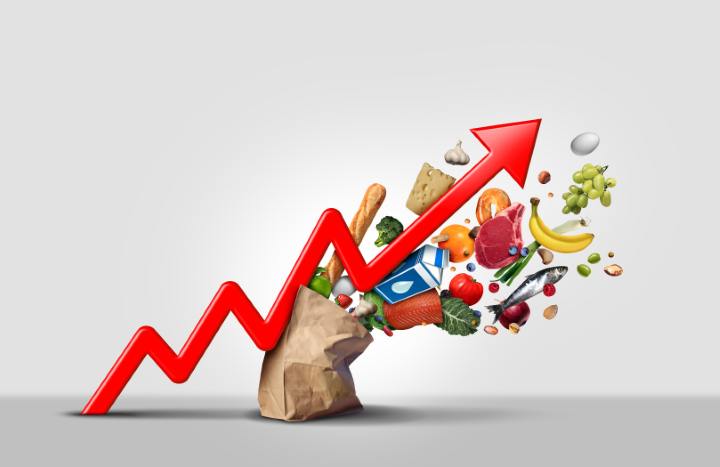
Anyone who has bought groceries recently will have noticed that prices are going up and up – a fairly obvious sign that inflation is at work. The two most recent inflation figures from the Office for National Statistics showed that in April and May inflation stood at 3.4%, which is higher than it should be – and everyone is feeling the effects.
The Bank of England’s Monetary Policy Committee is tasked by the Government with keeping inflation at 2%, which it does by manipulating the Bank Rate (base rate). Put very simply, when the Bank Rate increases, mortgage companies and lenders increase the interest rates for borrowing, leaving people with less money to spend on goods and services. This reduces demand therefore discouraging price rises. At the same time, the interest rate on savings increases, so people are tempted to save rather than spend. At the beginning of 2025, inflation was falling – in January it was 3%, falling to 2.8% in February and 2.6% in March, so the MPC reduced the Bank Rate from 4.75% to 4.5% in February, and to 4.25% in May, prompting some reductions in mortgage interest rates.
It was hoped by many that this process would continue, but instead, a series of Government decisions and external events have pushed inflation up rapidly, with the MPC holding the Bank Rate in June, making it far less likely we will see significantly cheaper mortgages any time soon.
How is inflation measured?
The headline rate that we call “inflation” is the CPI (Consumer Price Index), which measures 520 different goods and services that ordinary people in the UK buy. These are reviewed yearly according to trends, so, for example, 2024 saw the removal of hand sanitising gel and the addition of air fryers, while vinyl records, removed 32 years ago, made a surprising comeback. This year, exercise mats, VR headsets and pre-cooked pulled pork made their debut.
The increases (or occasionally decreases) in the cost of these physical items, and for services ranging from dental check-ups to phone bills, provides an overall indication of rising costs. The ONS data can also show rises in particular areas, so, for example, it won’t come as much of a surprise to learn that the inflation rate on food is much higher than CPI, reaching 4.4% in May – and chocolate increased by a terrifying 17.7%! The CPI does not include housing costs such as rents or mortgages, but these are monitored and included in a figure called CPIH.
Expert comment
 The main driver behind the increase in the headline rate was the sharp rise in household bills. “Awful April’s” barrage of bill hikes saw consumers saddled with rises to energy, water, mobile and broadband bills along with higher council tax, car tax and Stamp Duty costs. Food inflation also rose as supermarkets came under pressure from rising costs. An uptick in the headline inflation figure is likely to be a source of concern for households who may be fearing a return to the dark days of rapid price rises that devastated household budgets during the cost-of-living crisis. Higher inflation diminishes spending power and erodes savings, making it difficult for people to maintain the living standards they have become accustomed to. First time buyers may be disheartened, as it raises the risk that the pace of interest rate cuts may slow. There is some room for optimism, however. Mortgage rates are in retreat mode and property listings are on the rise, providing more opportunities to haggle on price. It means affordability levels are improving for some, which means new borrowers and those looking to upsize may have a better chance of securing the home they want.
Alice Haine, Personal Finance Analyst, Bestinvest
Why has inflation jumped?
There are many things that can affect inflation – the chocolate crisis, for example, is all down to bad weather in Ghana and Ivory Coast, which produce over half the world’s cocoa. In October 2022, when inflation jumped to a 41-year high of 11.1%, it was blamed on soaring energy prices caused by the war in Ukraine and Liz Truss’s mini-budget that gave tax cuts to higher earners, encouraging spending.
Budget changes have had a role to play in the recent surge. Kris Hamer, Director of Insight at the British Retail Consortium, explains, “Headline inflation accelerated in April as additional costs from rising National Living Wage and Employers’ NI costs filtered through to prices faced by consumers, as well as rising costs of utilities (energy, water and broadband). Rising inflation was inevitable following the wave of additional costs hitting employers, and particularly retailers who employ over three million people across the country. For months retailers have been warning that rising costs would lead to higher price.”
What action can I take?
Inflation affects some people more than others as it depends how you spend your money (you can find out your personal rate of inflation at ONS¹), but some costs are common to everyone. Beat rising grocery bills by switching brands
(or switching supermarkets), making the most of special offers and cooking more from scratch, and do your best to keep utility bills down by monitoring usage and changing provider if necessary.
If your savings are not paying at least the current rate of inflation then in real terms you are actually losing money, so always be proactive, grabbing introductory offers when you can and being prepared to switch regularly.
Fill you ISA, and consider (if you’re not ready to buy) whether you should lock money away in a top-paying fixed-rate account. There are savings products out there that still beat inflation – at the time of writing, best buys included 4.75% at Atom Bank (limited withdrawals), 4.56% at Chip (unlimited withdrawals, includes a one-year bonus) and 4.47% at Cynergy Bank, fixed for six months with no withdrawals.
For those nearly ready to buy, high inflation may have put a dampener on hopes for a rapid fall in mortgage interest rates, but that doesn’t mean putting your plans on hold.
David Hollingworth, Associate Director at L&C Mortgages, recommends focusing on getting the best available rate. “Mortgage rates have been harder to call in recent weeks. Overall, it looks as though fixed rates may bobble up and down without any significant trend or shift either way. Borrowers would be better to focus on getting the best available rates and keeping under review, rather than second-guessing the next move in interest rates.”
¹ ons.gov.uk/visualisations/dvc1833/calculator/index.html
Expert Comment
 The sticky inflation figures being forecast would reflect what most of us already know: bills are taking a bigger toll and eyebrows are still being raised at the tills in supermarkets across the country. However, because these price rises were already forecast by the Bank of England, it would be unlikely to have a significant impact on interest rate expectations. These have moved, after weakening labour market data was released, so the market now expects two more cuts this year. This is likely to be the key factor in the savings and mortgage market in the short term. For savers, it could put downwards pressure on fixed rate deals. Shorter fixed deals have already fallen as a result of the May rate cut, but longer fixes could come under pressure too. If you’re planning to fix for three to five years you might want to act sooner rather than later. It will remain important to choose the right combination of easy access and fixed rates to suit your needs – and shop around among online banks and savings platforms for the best deals available at the time. The way the mortgage market is moving around at the moment means acting fast and taking advantage of opportunities will be key when you’re looking for a deal.
Sarah Coles, Head of Personal Finance, Hargreaves Lansdown

First Time Buyer is an exciting bi-monthly glossy which takes a stylish and comprehensive look at all the options available, setting them out in an entertaining and informative way, and helping potential customers navigate their way through what is often a daunting and complex process. We dispel the myths, reinforce the facts and arm the reader with the tools necessary to make their homeownership dreams a reality.